Gate-Check Roulette: How to Beat the Baggage Sizer Without Ever Paying the Toll
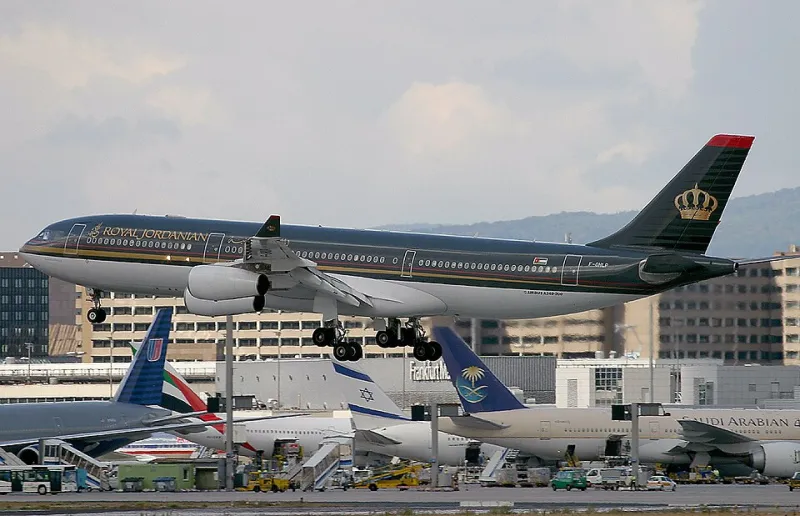
Photo: Konstantin von Wedelstaedt, GFDL 1.2, via Wikimedia Commons
Let's be honest about what a $49 fare really is. It's a slot machine lever. You pull it, the plane takes off, and somewhere between the jet bridge and your seat, a gate agent decides whether your vacation costs $49 or $149. The difference? A soft-sided duffel and a tape measure with a grudge.
At FlyLuckyJet, we've watched enough passengers lose this game to write the house rules down. Consider this your cheat sheet.
The Sizer Is Not a Myth, It's a Metaphor (That's Also Real)
Every budget carrier publishes its personal item dimensions — Spirit's is 18 x 14 x 8 inches, Frontier's is 18 x 14 x 8, Allegiant's is a generous 16 x 15 x 7. What the website doesn't tell you is that enforcement is wildly inconsistent, and it's inconsistent on purpose. The ambiguity is the business model.
Here's what actually happens: at the gate, agents eyeball your bag against a metal sizer frame. If it slides in without force, you board. If it doesn't, you're paying the gate-check fee, which can run $65–$99 — more than your ticket. Some agents measure everything. Some wave through anything that isn't a steamer trunk. You are, functionally, rolling dice with a person who's had a long shift.
The Strictest Tables in America
Not all airports are created equal. Based on a frankly unscientific but extensive survey of gate-check survivors, here's the vibe:
- Las Vegas (LAS) and Orlando (MCO): Casino town energy extends to the jet bridge. High volume, high enforcement. Assume you're being measured.
- Fort Lauderdale (FLL): Spirit's home turf. They wrote the rules here; they know every loophole.
- Denver (DEN) and Chicago O'Hare (ORD): Frontier's big hubs. Consistent checking, especially on full flights.
- Smaller regional airports: Your best odds. Fewer agents, less pressure, and the sizer occasionally lives in a closet.
The pattern is simple: full flight plus hub airport equals strict table. Empty midweek flight to Toledo? The sizer might not even be out of the back room.
Packing Hacks That Beat the Tape Measure
You don't need to be a packing wizard, just a slightly dishonest one:
- Wear your heaviest layers onto the plane. A jacket with pockets is a suitcase you're wearing. Nobody has ever been charged for pockets.
- The laptop pocket gambit. A soft bag with a padded laptop sleeve reads as a "personal item" even when it's borderline. Rigid roller bags read as "fee."
- Distribute the bulge. Stuff socks and chargers into your coat before boarding, then re-load after you pass the gate. Yes, this is undignified. So is a $99 gate fee.
- Duffels over rollers. Soft bags squish into sizers; hard-shell spinners do not. A duffel that's technically over the limit often passes because it compresses.
- Board in an early group. Overhead space is the real currency. If bins are full, agents start checking bags regardless of size — so buying early boarding for $15 is sometimes cheaper than the gamble.
When to Just Pay the Man
Here's the un-fun math. If you're checking a bag anyway, buying it online at booking costs $35–$45. At the gate: $65–$99. At the counter on a budget carrier, sometimes more. The single most expensive move in budget aviation is showing up with a checked bag you didn't prepay.
The breakeven point: if your bag has better than roughly a 60% chance of being flagged at the gate, prepay. Bigger than a duffel? Traveling with a family (more eyes on you)? Flying out of a hub on a Sunday? Pay upfront and board with your dignity intact.
The gamble only makes sense when your bag is genuinely borderline — and in that case, tighten the straps, wear the hoodie, and walk past that sizer like you own the airline. Worst case, you pay the fee you would've paid anyway. Best case, you just beat the house.
Roll the dice. Catch the flight. And maybe, just maybe, keep the $99.