Your Flight Deal App Is Lying to You (And Last-Minute Chaos Is Winning)

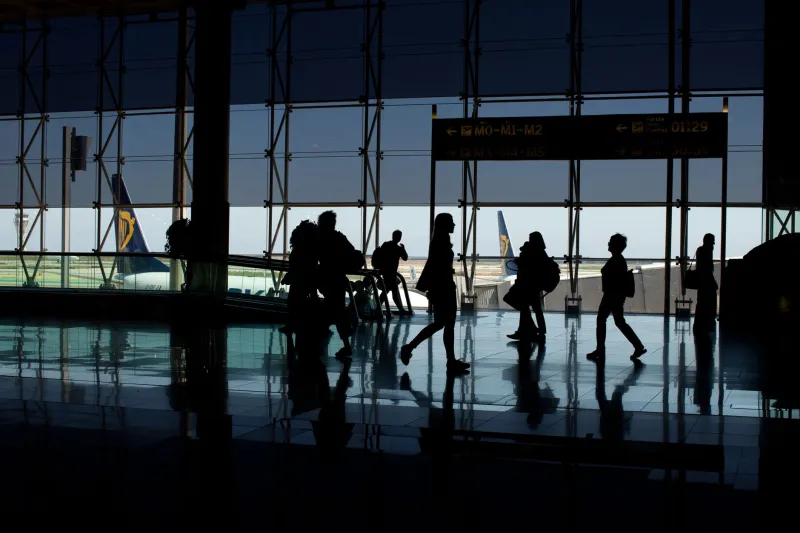
Photo: U.S. Air Force AFCENT by Senior Airman Derrick Bole, Public domain, via Wikimedia Commons
Picture this: You've been tracking a flight from Chicago to Miami for the better part of a month. You've got three different price alert apps running, a color-coded spreadsheet, and a browser history that looks like you're being paid to study airline economics. Then your coworker — the one who "just goes with the flow" — casually mentions she booked the same route last Thursday night for $140 less than you paid.
You want to flip a table. We get it.
But before you declare war on spontaneity, let's talk about why this keeps happening, and why the airlines are basically running a psychological experiment on all of us.
The Algorithm Doesn't Care About Your Spreadsheet
Airline pricing algorithms are not your friends. They are not your enemies either. They're something far more unsettling: they're indifferent. These systems process thousands of variables per second — seat inventory, competitor pricing, historical demand curves, even weather forecasts — and they spit out prices that can shift dramatically within hours.
Here's the counterintuitive part: those algorithms are also trying to fill seats. And as departure day approaches, empty seats start looking a lot like lost revenue. Airlines would rather sell a seat for $89 than let it fly empty at $300. That's not a theory — that's yield management in action, and it's been the quiet engine behind last-minute deal culture for years.
Price-tracking apps, for all their sophistication, are essentially looking backward. They analyze historical data to predict future pricing. But airline algorithms are increasingly forward-looking, reactive, and — frankly — chaotic in ways that historical patterns can't fully capture. The app tells you "prices usually drop on Tuesday." The algorithm says, "We've got 47 seats left and a storm front moving into Denver. Drop everything."
The Psychology of the Obsessive Planner
There's a behavioral economics concept called "decision fatigue," and budget travelers are particularly vulnerable to it. When you spend weeks monitoring prices, you're not just tracking flights — you're training your brain to expect a specific outcome. You anchor to a price point, and anything above it feels like a loss, even if the deal you're sitting on is still objectively good.
Spontaneous travelers don't have this problem. They come to the booking page without baggage (metaphorically — they definitely have baggage fees to worry about). They see a $110 fare to New Orleans and think, "That's cheap, let's go." No comparison. No anchoring. Just the clean, unencumbered joy of a decent deal.
Travel hackers who've cracked this code describe it almost like a mindset shift. One frequent flyer who logs over 80,000 miles a year put it bluntly: "I stopped trying to find the perfect price. I started asking what price would make me say yes right now. Usually, the airlines find that number for me within 72 hours of departure."
When the Dice Actually Land in Your Favor
So when exactly does last-minute booking win? The data suggests a few sweet spots:
48 to 72 hours before departure is where the magic tends to happen on domestic routes. This is when airlines make aggressive inventory decisions. If a flight is sitting at 60% capacity, expect the pricing engine to start getting creative.
Off-peak travel windows — Tuesday and Wednesday departures, early morning flights, and routes between secondary cities — see the most dramatic last-minute drops. Flying from Columbus to Austin at 6 AM on a Wednesday? You might just be the algorithm's favorite customer.
Shoulder season gambles pay off disproportionately for spontaneous travelers. Airlines over-project demand in spring and fall, then scramble to fill planes. The planner who booked in January gets the "fair" price. The last-minute booker in late October gets the apology discount.
Of course, this isn't universal. Peak holiday travel, major events, and popular international routes tend to punish the procrastinator. Nobody is getting a last-minute deal to New York on Thanksgiving Eve. The algorithm knows. It always knows.
The Tools That Actually Help (Without the Obsession)
Here's the thing — we're not saying ditch technology entirely. We're saying use it differently.
Instead of setting price alerts for a specific route on a specific date, try tools that surface flexible deals. Platforms that let you search by destination region or show you the cheapest available dates are built for spontaneous decision-making. You're not asking "when will this flight get cheap?" You're asking "where can I go cheap this weekend?" That's a fundamentally different — and often more rewarding — question.
Notification-based flash deal services are another underrated play. These aren't tracking apps; they're more like deal scouts that surface genuine inventory dumps when airlines need to move seats fast. Sign up, stay loose with your schedule, and let the deals come to you instead of chasing them.
The lucky traveler isn't the one who plans harder. They're the one who stays ready.
Rolling the Dice Without Losing Your Mind
None of this means you should book every flight at 11 PM the night before. That's a recipe for either a spectacular bargain or a $600 lesson in humility. What it does mean is that the rigid, obsessive planning model has some real blind spots — and airlines are quietly exploiting them.
The sweet spot is what travel hackers call "structured spontaneity." Keep a rough travel window in mind (say, any weekend in March). Have a loose destination category (warm, domestic, beach-adjacent). Then watch for the moment the algorithm blinks. When it does — and it will — you move fast.
At FlyLuckyJet, we've always believed that the best travel stories start with a little uncertainty and a willingness to roll with whatever the departure board throws at you. The planners among you might be wincing right now. That's okay. Your coworker with the $140 savings is already at the pool.
Maybe it's time to put down the spreadsheet and pick up the dice.