Fly Like a Ghost: How to Haunt an Empty Plane Into Giving You a Dirt-Cheap Ticket

Photo: LLs, CC BY-SA 4.0, via Wikimedia Commons
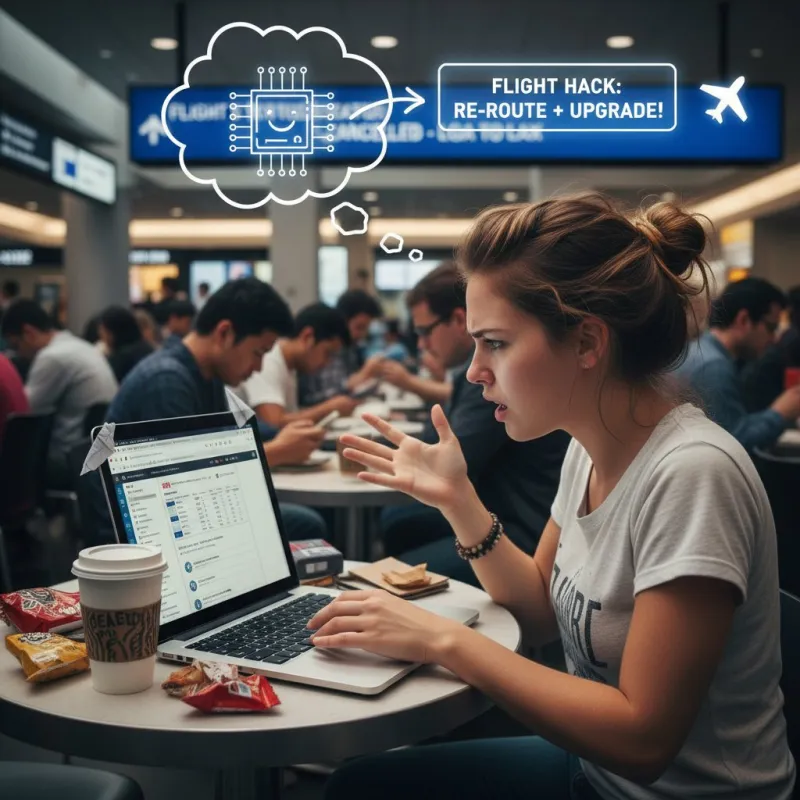
There is a specific kind of beautiful chaos that happens roughly 48 to 72 hours before a domestic flight departs with 60 empty seats and a revenue manager somewhere in an office building quietly losing their mind. That chaos, dear reader, is your golden ticket. Or at the very least, your dramatically cheaper ticket.
At FlyLuckyJet, we believe luck isn't just a coin flip — it's a skill you can sharpen. And nowhere is that more true than in the dark, data-rich world of airline load factors, last-minute inventory dumps, and the gloriously desperate pricing behavior of carriers who really, really don't want to fly a half-empty plane to Phoenix.
What Is a Load Factor, and Why Should You Care?
Airlines obsess over something called a load factor — the percentage of available seats that are actually filled with paying passengers. The industry average hovers around 85 to 88 percent on domestic U.S. routes. That sounds healthy until you realize it also means that on a 180-seat Boeing 737, roughly 22 to 27 seats are regularly going out empty.
Now here's where it gets interesting: airlines have fixed costs whether those seats are filled or not. The fuel burns the same. The crew gets paid the same. The gate fee at O'Hare doesn't care how many people boarded. So when a flight is trending toward a 60 or 65 percent load factor with departure approaching, the revenue management algorithm starts doing something very human — it panics.
That panic manifests as price drops. Sometimes dramatic ones.
The 72-to-48-Hour Window Is Your Personal Casino
Most pricing algorithms are programmed to hold firm on fares until a certain threshold is crossed, then release discounted inventory in tiers. Think of it like a dam. The airline holds back the cheap seats, hoping demand will catch up. But when the departure clock is ticking and demand clearly isn't showing up to the party, those gates open.
The sweet spot is typically 72 to 48 hours before departure on routes that don't have strong last-minute business traveler demand. Transcon routes like New York to LA? Those get snapped up by road warriors on company cards. But mid-tier routes — think Charlotte to Kansas City, Dallas to Tucson, Chicago to Raleigh — those are where the ghost seats live.
If you've got flexibility in your schedule (and let's be honest, you're reading a site called FlyLuckyJet, so flexibility is kind of your thing), this window is where the magic happens.
How to Spot an Underbooked Flight Before the Price Drops
You don't need a Bloomberg terminal or a friend at United's revenue desk. You need a few free tools and a willingness to be slightly obsessive for about 20 minutes.
1. Track seat maps obsessively (it's not weird, it's strategy)
Seat maps on Google Flights, Kayak, or directly on airline websites show you how many seats are still available. A flight departing in 48 hours with 40+ open seats in economy is a screaming red flag that a price drop is imminent. Airlines don't show you load factor data directly, but an unusually open seat map tells the same story.
2. Watch for middle-of-the-week departures on leisure routes
Tuesday and Wednesday flights on routes that are primarily driven by vacation travelers — Vegas, Orlando, Cancun connections, beach destinations — tend to underperform on load factor. People want to fly out Friday and back Sunday. A Tuesday departure to Miami with 50 open seats two days out? That's a ghost plane, and it wants you on it.
3. Set fare alerts and check them obsessively at odd hours
Price drops on underbooked flights often happen late at night when the revenue management team has gone home and the algorithm is running on autopilot. Set Google Flights alerts for your target routes and check them around 10 PM to midnight. You'd be amazed what shows up.
4. Look for routes that recently added capacity
When an airline upgrades a route from a regional jet to a larger mainline aircraft — or adds a second daily frequency — they often overshoot demand. Those extra seats need to go somewhere. Routes that recently expanded are prime candidates for the ghost seat phenomenon.
The Overbooking Flip Side: When Airlines Oversell and Then Panic-Discount Upgrades
Here's a plot twist worth knowing: sometimes the chaos runs in the opposite direction. An airline oversells a flight (yes, this is legal, yes, it's maddening), then realizes they need to move some passengers to a less full plane on the same route. This is when upgrade offers, same-day flight change deals, and voluntary rebooking incentives appear — often with travel credits attached.
If you're at the gate on a packed flight and an agent asks for volunteers to take a later departure, that later flight is frequently the ghost plane. And you might walk away with a $300 credit, a confirmed seat on a quieter aircraft, and a story to tell. That's not bad luck. That's the FlyLuckyJet lifestyle.
Why This Works Better on Smaller Carriers and Budget Airlines
Legacy carriers have sophisticated enough revenue management systems that they sometimes catch their own pricing errors before you can act on them. Budget carriers and smaller regional airlines? Not always. Their algorithms can be slower to react, and their customer service teams have less authority to manually override discounts once they're live.
Spirit, Frontier, Allegiant — these carriers operate on razor-thin margins and fly routes that are heavily dependent on leisure demand. An underbooked Allegiant flight to Punta Gorda or a Spirit route to Myrtle Beach is practically a neon sign flashing "DEAL INCOMING" when you check the seat map 48 hours out.
Roll the Dice, But Set Your Limits
Look, this strategy requires flexibility. You can't deploy it for your cousin's wedding in Savannah that starts at 2 PM on Saturday. But for long weekends, solo trips, or any travel where you have a day or two of wiggle room on departure, hunting ghost seats is one of the highest-return activities in the budget travel playbook.
The airlines built the system. The algorithms run the pricing. But the empty seats? Those are your invitation. Show up, haunt the seat map, and let the panic pricing do the heavy lifting.
At FlyLuckyJet, we don't just believe in luck — we believe in the kind of luck you manufacture with a little data, a little patience, and a willingness to fly out on a Tuesday when the plane is basically begging you to board.
The ghost seats are waiting. Go find them.