Why Your Neighbor Paid $189 for the Same Seat You Paid $412 For (And How to Flip the Script)
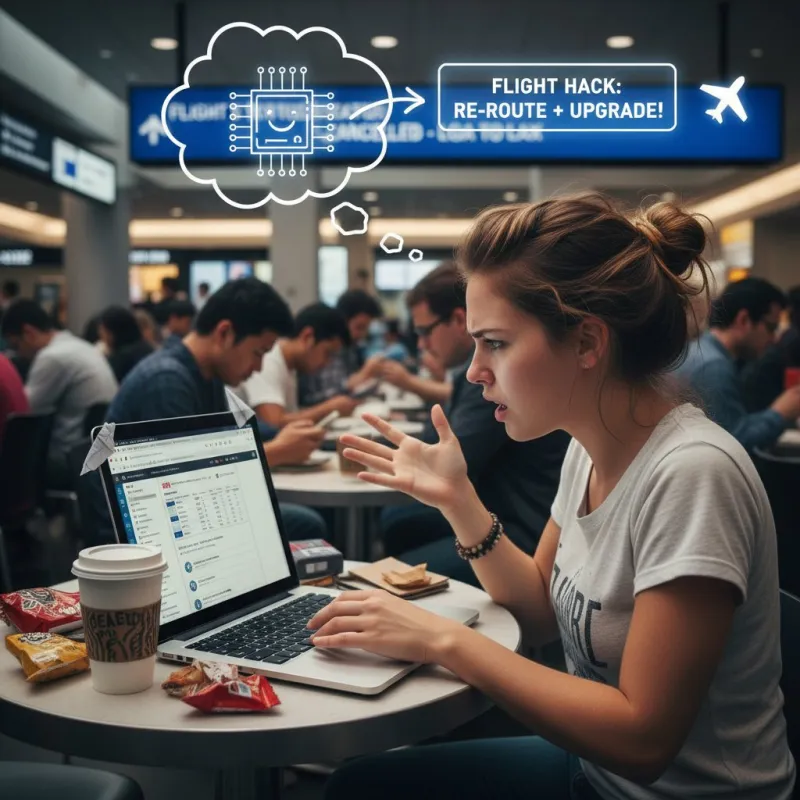
Photo: person comparing flight prices on laptop with shocked expression at airport, via obrazki.ai
Picture this: You're crammed into 24B, knees kissing the tray table, and you strike up a conversation with the guy in 24C. Turns out he's flying to the exact same wedding in Denver, booked the exact same airline, and is sitting in the literal same row — except he paid $189 and you paid $412. You both ordered the same sad pretzels. Only one of you is fuming about it.
Welcome to the beautiful, maddening world of airline dynamic pricing — a system so sophisticated it practically has a personality. And right now, that personality is laughing at you.
But here's the good news: the algorithm isn't invincible. At FlyLuckyJet, we're in the business of helping you roll smarter, not just luckier. So let's crack open the black box.
The "Luck Tax" Is Real — And It's Costing You
Airlines don't post a single price for a seat and call it a day. They use dynamic pricing engines — complex algorithms that adjust fares in real time based on dozens of variables. Demand, time of day, how long you've been staring at a route, what device you're on, your purchase history, even your ZIP code. Yes, really.
The result? Two people buying the same seat on the same day can pay wildly different prices. The difference isn't luck in the cosmic sense — it's that one person looked like a desperate buyer and the other looked like someone the airline needed to court.
That gap? We call it the Luck Tax. It's the premium you pay for being predictable, trackable, and, frankly, a little too eager.
Your Browser Is Snitching on You
Here's something the airlines would prefer you didn't know: your browser cookies are basically a neon sign that says "I REALLY WANT THIS FLIGHT."
Every time you search a route, an airline's pricing engine takes notes. Search JFK to LAX on Monday, come back Wednesday, search again? The algorithm clocks that you're interested — maybe even committed — and quietly nudges the price upward. It's the travel equivalent of a car salesman noticing you've circled the lot three times.
The fix is almost embarrassingly simple: use incognito or private browsing mode every time you search for flights. No cookies, no price creep, no algorithm profiling you like a suspect in a crime drama. This one habit alone can save you anywhere from $20 to well over $100 on popular routes.
Bonus move: clear your cookies before switching from incognito back to regular browsing if you're comparison shopping across sites. The algorithm forgets you. You stay a stranger. Strangers get better deals.
The Desperation Window: When Airlines Need You More Than You Need Them
Airlines are in the business of selling perishable goods. An empty seat at takeoff is revenue that evaporates forever — you can't warehouse unsold flights like you can unsold sneakers. This creates moments of genuine airline desperation, and those moments are where the real deals live.
So when is an airline desperate?
- Six to eight weeks before departure on leisure routes, when booking curves show whether a flight is underperforming. If seats aren't moving, prices drop.
- Tuesday and Wednesday afternoons, historically when airlines launch fare sales to compete with each other's weekend promotions — and prices haven't been snapped up yet.
- Off-peak travel windows: Think Tuesday departures, early morning flights, red-eyes. Airlines know these are harder sells, so they price them to move.
- Shoulder season bookings: That sweet spot between peak and off-peak — late January for warm destinations, early September for Europe — when demand softens but the experience is still great.
Conversely, airlines are confident in demand during holiday weekends, spring break, and summer peak. That's when the algorithm is basically lounging in a hammock, not sweating a single empty seat. Book during those windows and you're paying full confidence-tax rates.
Passenger Profiling: Are You on the Naughty or Nice List?
This is where it gets a little unsettling: airlines and booking platforms build behavioral profiles. Frequent flyers who always book business class aren't getting the same price offers as someone who's never booked with the airline before.
New customers often get introductory pricing because platforms want to acquire them. Loyal customers sometimes get worse deals because the system knows they'll buy anyway. It's counterintuitive, but it's real.
Strategies that work against profiling:
- Use a VPN to mask your location. Pricing can vary by geography — sometimes dramatically. Searching from a different virtual location can surface different fare tiers.
- Try booking directly on the airline's site after finding the deal on an aggregator. Sometimes airlines offer web-exclusive fares that aggregators don't surface, or they match prices to avoid losing the direct booking.
- Create a new account or book as a guest on platforms you haven't used in a while. Fresh profiles sometimes trigger acquisition-mode pricing.
None of this is illegal, shady, or even particularly sneaky. You're just refusing to be profiled as a predictable, high-willingness-to-pay traveler. Which, honestly, is just good consumer behavior.
The "Half-Price Seat" Personality: What It Actually Looks Like
People who consistently pay less for flights aren't just lucky. They've developed habits that make them look — to an algorithm — like low-priority, price-sensitive buyers who need to be won over. Here's the profile:
- They search in private browsing from varied devices.
- They check prices at off-peak hours (late night, early morning).
- They're flexible on departure day by even one or two days.
- They set fare alerts and wait, rather than booking on impulse.
- They understand that the first price they see is rarely the best price.
That last point is critical. The algorithm is testing you. It shows you a price to gauge your reaction. Bounce away, come back in incognito, and sometimes the price has adjusted. Not always — but often enough to make the habit worth building.
Roll Smarter at FlyLuckyJet
Look, we're called FlyLuckyJet for a reason — we love a good roll of the dice as much as anyone. But real luck? Real luck is what happens when preparation meets opportunity. The traveler who paid $189 for that Denver seat didn't stumble into that deal. They searched smart, waited for the desperation window, and made the algorithm work for them instead of against them.
The Luck Tax is optional. You just have to opt out.
Next time you're hunting for a fare, go incognito, check on a Tuesday afternoon, and give yourself a little runway before the trip. The algorithm is always running. The question is whether it's running you — or the other way around.
Now go find your $189 seat. 24C is waiting.