Frequent Flyer Points Are a Scam (There, We Said It) — Here's What Smart Budget Travelers Do Instead
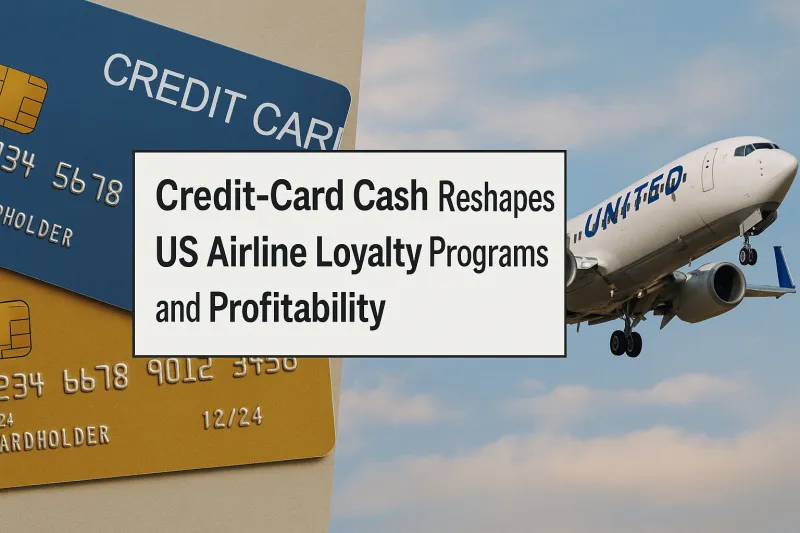
Photo: airline loyalty points credit card frustrated traveler, via aeronauticsonline.com
Let's set the scene. You've been loyal. Painfully, admirably, almost embarrassingly loyal. You fly Delta when Southwest is cheaper. You book through the airline portal even when Expedia is $40 less. You've got a co-branded credit card with an annual fee that costs more than your Netflix, Hulu, and Spotify subscriptions combined. And in return, you've amassed a glittering pile of frequent flyer miles that your airline app displays with the kind of fanfare usually reserved for lottery winners.
There's just one problem: those points are worth less than they were last year. And the year before that. And they're going to be worth less next year, too.
Welcome to the loyalty program trap — one of the most elegant long cons in American consumer culture.
The Slow Bleed Nobody Talks About
Here's something the airlines would rather you not Google: every major US carrier — Delta, United, American, you name it — has conducted what the industry politely calls "award chart restructuring" multiple times over the past decade. Translation: they quietly moved the goalposts while you were busy collecting points.
Delta ditched its fixed award chart entirely back in 2015, switching to a "dynamic pricing" model for redemptions. Sounds fancy and modern, right? What it actually means is that the number of miles needed for a given flight can change based on demand, season, time of booking, and — it often feels like — the phase of the moon. That "free" domestic round-trip that used to cost 25,000 miles? It might run you 40,000 now on a busy travel weekend. Or 55,000. Nobody really knows until they check.
United and American have followed suit with similar opacity. The result is a system where your balance looks impressive on paper but behaves like a currency in a country experiencing aggressive inflation. You're technically richer. You can practically buy less.
And that's before we even get into expiration policies, blackout dates, seat availability restrictions, and the sheer administrative ordeal of actually redeeming points for a flight a real human being would want to take.
The Math That Will Make You Want to Cry
Let's talk numbers, because this is where the loyalty illusion really unravels.
Industry analysts generally value domestic airline miles at somewhere between 0.8 and 1.4 cents per point, depending on the program and how you redeem them. That sounds fine until you realize that a typical co-branded airline credit card earns you roughly 1 to 2 miles per dollar spent on everyday purchases. So for every $1,000 you run through that card — groceries, gas, your kid's soccer cleats — you're earning maybe $10 to $20 in real travel value.
Meanwhile, that $1,000 sitting in a high-yield savings account is earning you actual money. And those $10 to $20 in "travel value" come with strings attached: you still have to find award availability, pay taxes and fees (sometimes surprisingly steep), and hope the airline doesn't devalue the program between now and when you actually want to fly.
Compare that to the alternative: a flash sale fare from Chicago to Miami for $69 one way, booked on a Tuesday morning when the travel gods are feeling generous. No points required. No loyalty hoops. Just you, a credit card, and a boarding pass.
What Lucky Travelers Are Doing Instead
At FlyLuckyJet, we've talked to a lot of people who have cracked the budget travel code, and here's the pattern we keep seeing: the best deals go to people who play the odds on cash fares, not points redemptions.
Think of it like a casino. The loyalty program is the slot machine with a pretty interface and flashing lights — it feels like you're winning even when the house is cleaning up. The flash sale hunter, on the other hand, is the card counter. They're watching patterns, moving fast, and walking away with real money.
Specifically, here's what the savvy budget flyer does differently:
They set fare alerts instead of checking point balances. Tools like Google Flights, Hopper, and various deal newsletters send notifications the moment prices drop on routes they care about. No loyalty program required. Just a smartphone and a willingness to book fast.
They fly off-peak on purpose. Tuesday and Wednesday flights, early morning departures, late-night red-eyes — these consistently undercut peak pricing by 20 to 40 percent. A strategic budget traveler plans around these windows rather than chasing a points redemption that might not even have seat availability.
They embrace the flash sale. Airlines routinely dump unsold inventory through 24 to 72-hour flash sales, especially on routes that didn't fill as expected. These deals often beat the equivalent points redemption by 30 to 50 percent in real dollar value — and they don't require you to have been hoarding miles since 2018.
They don't pay for loyalty. No annual fee card. No forced brand loyalty. They book whoever is cheapest for that specific trip, which means they're not subsidizing the loyalty program through higher everyday spending.
"But What About My Points?"
Okay, fair. Maybe you've already got a pile of miles sitting there and you're wondering what to do with them. We're not going to tell you to just abandon them — that would be like telling someone to throw away a gift card because gift cards are a slightly inefficient way to give money. Use what you've got.
But the play here is to stop accumulating as a strategy. Use your existing points for a genuinely high-value redemption — business class on a long international haul, for instance, where cash prices are brutal and points can actually shine. That's where the math sometimes works in your favor.
For domestic travel, though? For that long weekend in Nashville or that spontaneous trip to see your college roommate in Denver? Cash fares, flash deals, and a little bit of FlyLuckyJet energy will almost always beat the points game.
Roll the Dice, Skip the Program
The loyalty program was never really designed for you. It was designed to make you feel like it was designed for you, which is a very different thing. Airlines are extraordinarily good at this. They invented a currency, control its value, and get you to spend real money chasing it. That's not loyalty — that's just clever marketing with a frequent flyer number attached.
The lucky traveler doesn't wait for the algorithm to decide their points are worth redeeming. They watch the deals, move fast when the fares drop, and pocket the difference. It's not glamorous. It doesn't come with a fancy card in the mail or an elite status welcome kit.
But it does come with a boarding pass — usually for a lot less than you'd expect.